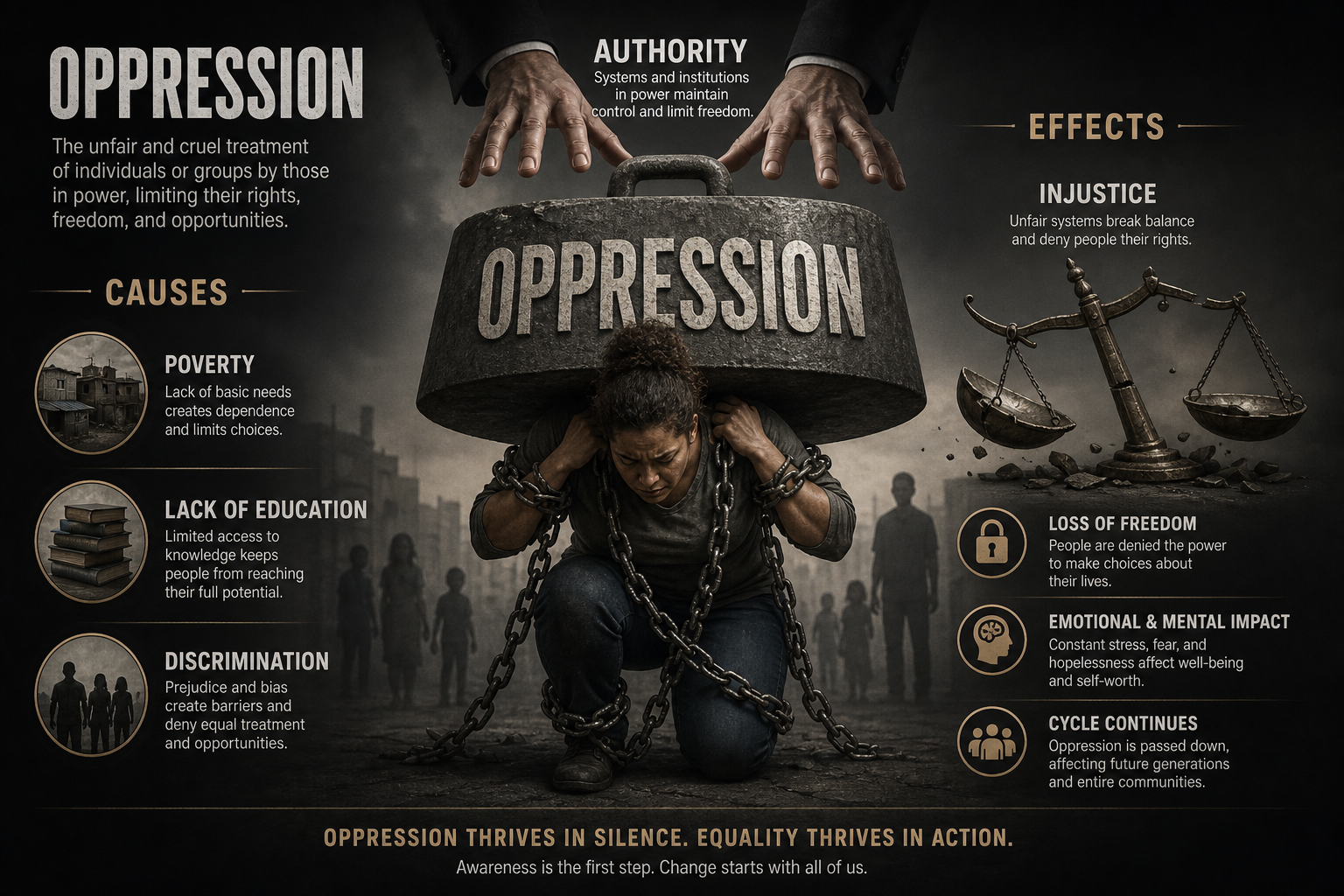
Oppression: The Slow Crushing Of Dignity And Freedom
We often think of oppression only as the cruelty of tyrants or obvious acts of force, yet it can also grow in quieter, subtler ways that slowly shape the life of a community. It begins when the idea takes root that some people are more valuable than others, that power entitles some to rule without restraint, and that freedom and dignity are not for everyone.
Societies that allow this to grow may appear orderly for a time, but beneath the surface they become divided, fearful, and fragile. They waste potential, destroy trust, and eventually lose the very qualities that make a community strong. To understand how societies unravel, we must explore what oppression truly is, how it takes hold, and why it is so damaging to us all.
To begin with clarity: oppression is not the same as fair authority, the rule of law, or reasonable limits to protect others. This is a common misunderstanding: the belief that control is necessary for order, or that restricting freedom is always justified. In truth, there is a clear difference between serving the community and dominating it
Oppression is the unjust use of power to limit the freedom, dignity, and opportunities of others, often to benefit a few. It may appear in unfair rules or treatment, but it can also hide in attitudes and systems that treat some people as less worthy. It works by creating barriers, spreading fear, and convincing people that their situation is normal or unavoidable. It is rooted in the false idea that worth depends on status, group, or power, rather than being shared equally by all.
At its heart, oppression creates a way of life built on inequality rather than respect. Where it is present, people hold back from contributing, trust fades, and division grows. It stifles creativity and wisdom, leaving communities weaker and less able to adapt. Even those who hold power are harmed, as it distorts their character and isolates them from others. It replaces genuine peace with a fragile order that depends on control rather than consent. Over time, it creates deep wounds that are hard to heal, and it leaves a society unable to flourish for everyone.
Yet oppression rarely begins with great acts of cruelty; it starts with small shifts in attitude, silence in the face of unfairness, or the belief that some voices matter less. It grows when we look away, or when we accept that difference is a threat. Recognising these patterns helps us see that its opposite is not chaos, but respect, justice, and the courage to stand for what is right.
There is far more to explore about how oppression gradually takes root, how it harms every part of community life, and why understanding it helps us protect the dignity and freedom of all. To read the full reflection, continue here: https://open.substack.com/pub/...
Post a comment