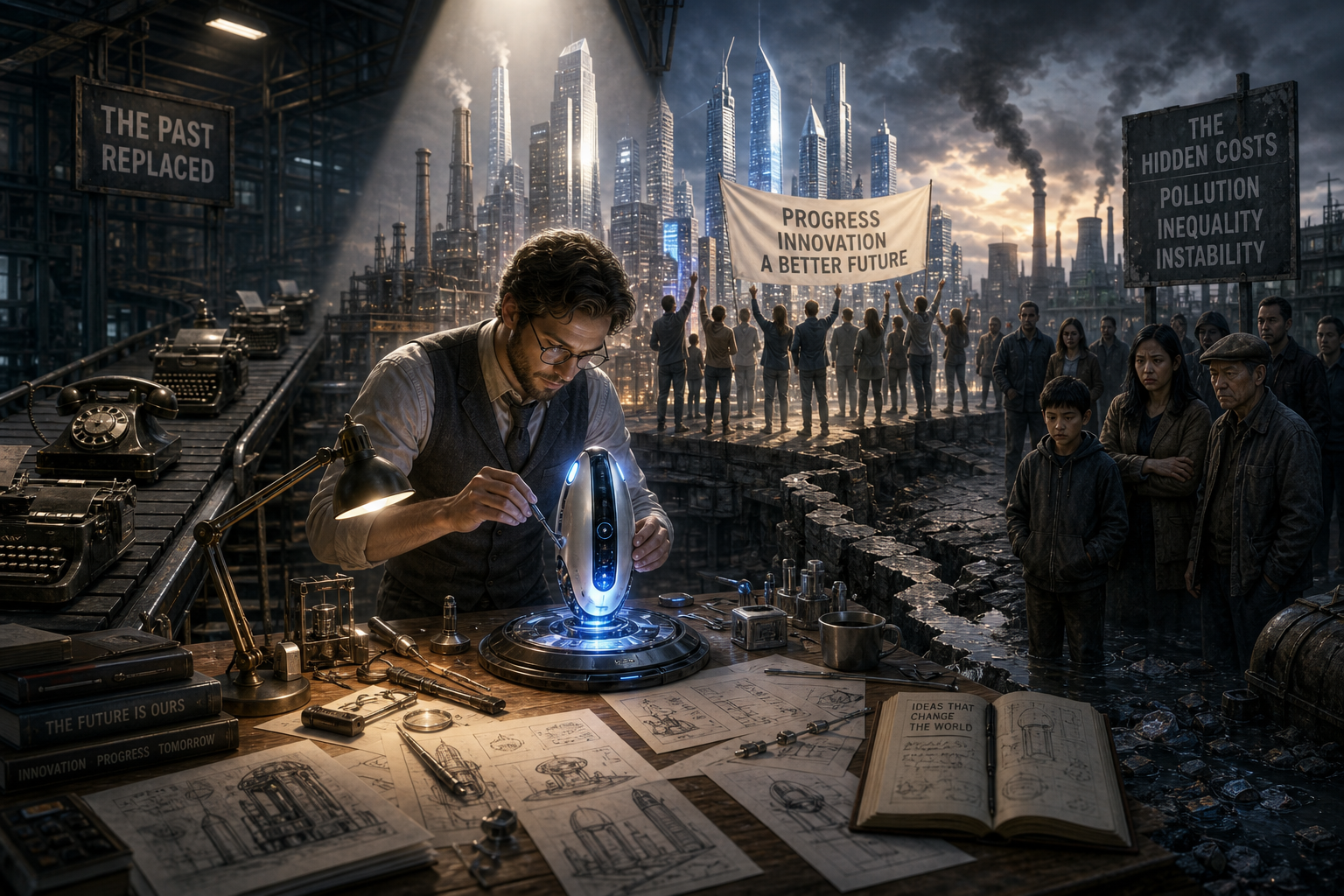
Balancing Progress and Permanence In a Sustainable Society
We often think of innovation as simply the drive to create something new, to move faster, or to replace what is old with what is modern. It is celebrated as the engine of growth and the answer to every challenge. Yet history shows us that not all change brings lasting good; some advances bring short‑term convenience but leave behind damage, inequality, or instability for future generations.
This is why innovation, when understood wisely, is far more than just novelty or invention. It is the careful, creative effort to improve how we live, work, and relate to one another while protecting what is truly valuable and ensuring progress serves everyone, not just a few. Without this balance, even the most brilliant discoveries can become forces of division or decline. To understand how we build a society that can grow and adapt without losing its way, we must explore what innovation truly is, and why it must be rooted in respect for both people and our world.
To begin with clarity: innovation is not merely change for the sake of change, nor the belief that everything new is automatically better than what came before. This is a common misunderstanding: the idea that progress means constantly replacing the past or that tradition and improvement are enemies. In truth, true innovation is far more thoughtful. It does not reject what is good or proven; it builds upon it, seeking to improve without destroying what sustains us.
It is the creative application of knowledge and imagination to solve problems and enhance wellbeing in ways that are responsible, fair, and enduring. It is not only about new tools or technology, but also about better ways to organise communities, share resources, and resolve conflict. It recognises the difference between novelty and value, asking not only what we can do, but what we ought to do weighing benefits against costs and asking whether change serves the common good.
At its heart, innovation reflects our desire to learn, grow, and make life better, while acknowledging our duty to those who follow. Where it is reckless or self‑serving, it depletes resources, widens inequality, and creates fragility. By contrast, when guided by care and fairness, it allows us to live well without waste, build resilience, and ensure progress is shared. It reminds us that we are not trapped by the past, but that we must always consider the future as we move forward.
Yet responsible innovation is never automatic; it requires wisdom alongside creativity, and the courage to ask difficult questions before acting. It calls upon those with influence to ensure change serves all, not just a few, and to balance ambition with humility.
There is far more to explore about how innovation can strengthen rather than weaken our communities, and how it helps us build a society that adapts and grows while remaining true to what matters most.
Post a comment