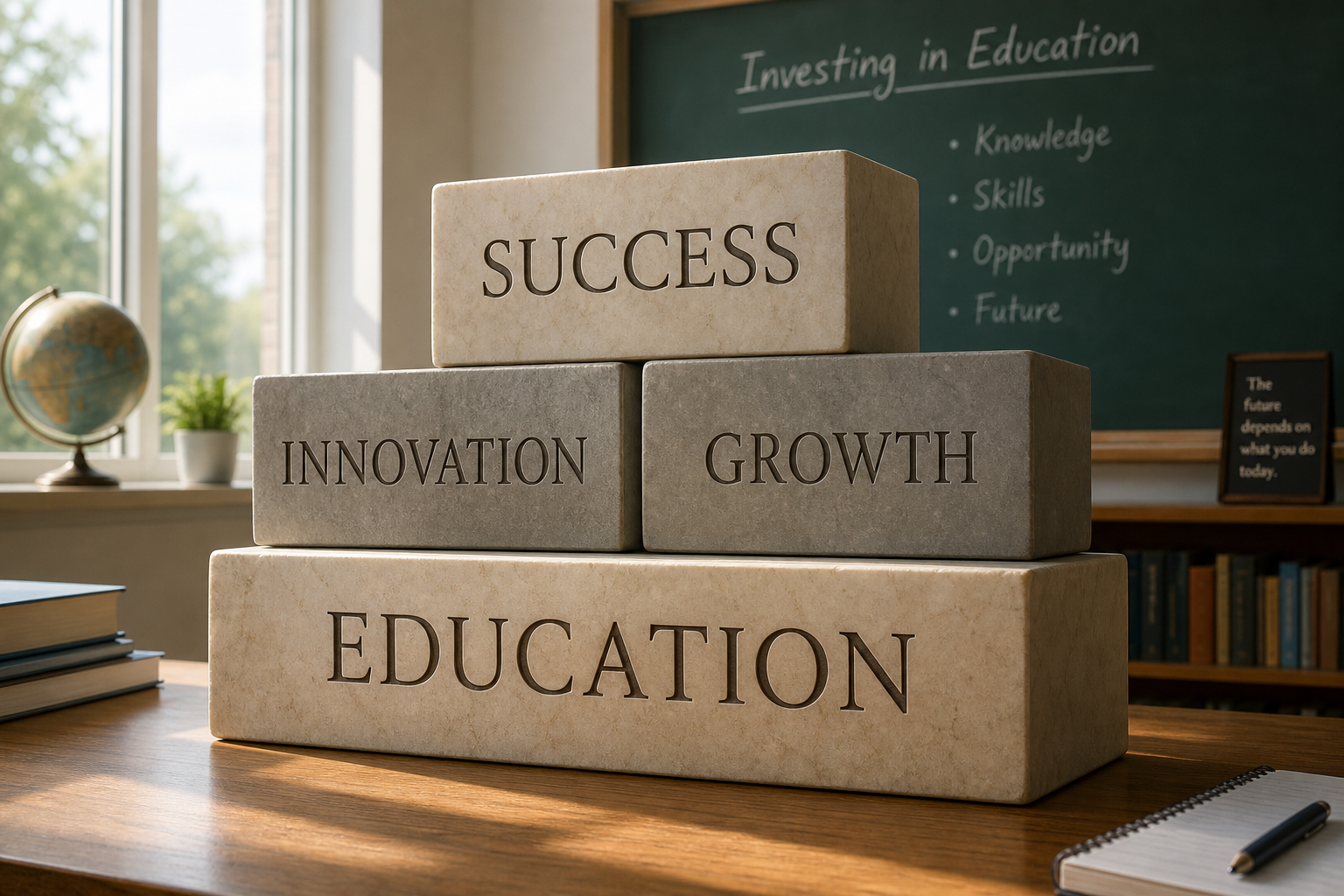
Education: Lighting The Way To A Sustainable Society
We often think of education primarily as the acquisition of facts, skills, or qualifications something to help us find work or advance in life. It is often measured by results and seen as a tool for personal success. Yet the societies that have truly endured understood it as something far greater: not merely training for employment, but the process by which we learn to live well, understand our place in the world, and carry forward what is good while building something better.
A society that reduces education only to economic gain will eventually lack wisdom, direction, and the ability to care for its future. To understand how we build a way of life that lasts, we must explore what education truly is, and why it is so essential to our shared future.
To begin with clarity: education is not simply filling a mind with information, nor is it complete once a certain level of knowledge is reached. This is a common misunderstanding: the belief that its only purpose is to give individuals an advantage over others. In truth, true education is the lifelong nurturing of the whole person mind, character, and spirit so that we gain knowledge, develop wisdom, learn to think clearly, and grow in understanding and virtue.
It teaches us not only what to know, but how to think, how to seek truth, and how to apply what we learn with respect for others and our world. It includes learning about the world and its history, but also how to live together: how to listen, respect difference, take responsibility, and care for what we share. It recognises that knowledge without wisdom can be dangerous, and skill without character can do harm. It helps each person discover their gifts so they may contribute to the common good.
At its heart, education reflects our shared humanity: we build upon the wisdom of those before us, and we have a duty to pass on what we have learned. Where it is narrow or lacking, societies become short‑sighted, divided, and fragile. By contrast, when it nurtures the whole person, it creates thoughtful, responsible citizens who can make wise choices, respect others, and stand up for justice. It empowers people, reduces inequality, and fosters the innovation and care needed to protect our world for generations.
Yet education is never complete; it is a lifelong journey of curiosity and growth. It calls upon teachers and leaders to inspire rather than merely instruct, to encourage critical thinking, and to nurture character alongside knowledge. It is lived out daily through asking questions, listening openly, learning from experience, and valuing wisdom as much as skill.
There is far more to explore about how education shapes every part of our shared life, how it builds character and wisdom, and why it is the surest foundation for a fair and sustainable future.
Post a comment