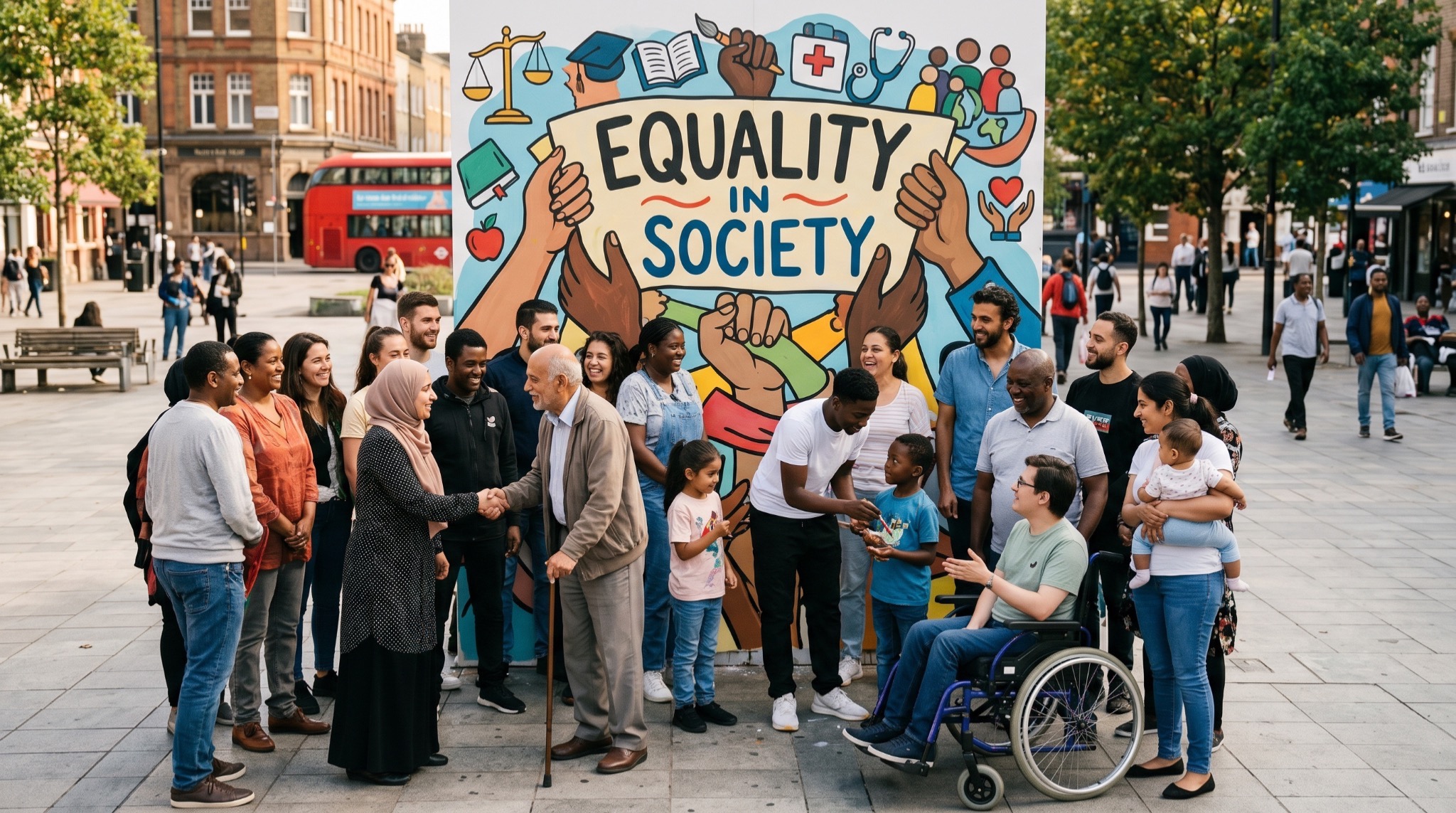
Equality: The Foundation Of Trust, Flourishing, and Sustainable Society
Introduction
Over years of walking alongside people from every walk of life, I have observed a simple yet profound truth: societies do not endure because of great wealth, impressive infrastructure, or powerful leaders alone. They endure because of the quality of the relationships that bind their members together. When I listen to stories of communities that have stood strong through decades of change, conflict, and hardship, one consistent thread emerges: they have found ways to value every person, not merely as a resource or a statistic, but as someone with inherent worth
This brings us to the principle of equality, a concept often reduced to slogans or misunderstood as uniformity. In truth, equality is the bedrock upon which trust is built, justice is established, and a way of life capable of sustaining itself across generations is made possible. It is not about making everyone the same; it is about ensuring that every person has the same standing, the same protection, and the same opportunity to contribute to and benefit from the common good. What follows is a reflection on the true nature of equality, why it is indispensable to a thriving society, and how it must be practiced if we wish to build something that lasts.
I have come to understand that equality is one of the most frequently misinterpreted ideas in public conversation. Many assume it means treating every person in exactly the same way, regardless of their needs, circumstances, or abilities. Others believe it demands that outcomes be identical for all, erasing natural differences in talent, effort, or interest. Still others see it as a political tool, a demand that threatens tradition or individual freedom. None of these views capture its true meaning. Equality, at its core, is the recognition that every human being possesses equal and inherent dignity. This dignity is not earned, granted by governments, or dependent on status, wealth, race, gender, faith, or ability. It is the shared foundation of our humanity
To affirm equality is to say that no person is more or less valuable than another, and that the rights and respect owed to one are owed equally to all. It is about equal standing before the law, equal access to essential resources, and equal voice in the decisions that shape collective life. It is important to distinguish equality from sameness. We are not identical; we differ in background, capacity, and need. True equality acknowledges these differences and responds with fairness rather than rigid uniformity. For example, ensuring that a person with a disability has the support required to participate fully in community life is not a departure from equality; it is the very way equality is made real
It means adjusting conditions so that every person can stand on the same footing, even if the path each travels looks different. Equality is also not the enemy of excellence or personal achievement. It does not seek to pull anyone down, but rather to lift the floor beneath everyone. It creates a system where success is open to all, not reserved for a privileged few, and where contribution is valued regardless of social position. When we understand equality in this way, we see it as a life‑giving principle, one that respects both individual uniqueness and shared humanity.
The impact of equality on the health and longevity of a society is difficult to overstate. When equality is embedded in the structures and habits of a community, it acts as a powerful stabilising force. It builds trust, because people believe they are being treated fairly and that their interests are not being ignored in favour of a small group. It reduces division, because it rejects the idea that some belong more fully than others. And it fosters resilience, because it draws on the full potential of every member rather than wasting the talents and energy of those who are marginalised. Consider what happens when equality is absent or poorly upheld. Where access to education, healthcare, work, or justice depends on wealth, connections, or social status, a deep rift opens between groups. Resentment grows, and trust in institutions erodes. People begin to see society as a competition where winning means protecting one’s own advantage rather than contributing to the common good. In such conditions, resources are hoarded rather than shared, and the most vulnerable are left to bear the heaviest burdens
History shows us repeatedly that societies marked by deep inequality are fragile; they are more prone to unrest, instability, and decline, and they rarely plan for the long term because priorities are skewed toward immediate gain for the few. By contrast, where equality is actively pursued, the benefits ripple outward. Children from every background can develop their gifts, leading to greater innovation and collective progress. People feel secure in their rights, so they are more willing to cooperate and make sacrifices for the future. When individuals know they are valued equally, they are more likely to respect the rights of others, creating a cycle of mutual care and responsibility
This is how a society becomes sustainable; it distributes both opportunities and burdens fairly, ensuring that no one group is left behind and that the well‑being of future generations is not compromised for short‑term advantage. Equality also upholds human dignity in practice. It ensures that the law protects the poorest as firmly as the wealthiest, that public services serve all citizens, and that decisions are made with the needs of the whole community in mind. In this sense, equality is not only a moral principle but a practical necessity. A society cannot flourish if a significant portion of its people are excluded from full participation. Sustainability requires broad‑based support, and broad‑based support can only exist when people feel they are treated with equal respect and concern.
If equality is to be more than a statement or a goal written in documents, it must be lived out actively and consistently. It is not something that can be achieved once and then forgotten; it demands constant attention, reflection, and effort from individuals, communities, and institutions alike. For individuals, living out equality begins with a shift in perspective. It means recognising our shared humanity before our differences, and treating every person we meet with the same respect we would wish for ourselves. It requires us to challenge our own assumptions and biases, to listen to voices that are often unheard, and to speak up when we see others being treated unfairly
It calls us to reject stereotypes and to value people for who they are, not for what they own or what position they hold. In daily life, this may look like fair treatment in the workplace, inclusion in community gatherings, or simply giving equal weight to the opinions of those with less influence. For communities and institutions, equality means building systems that are fair and transparent. It means ensuring that laws and policies do not favour one group over another, and that access to essential services is available to all regardless of circumstance. It requires ongoing review and adjustment, because social conditions change and new barriers can emerge. For example, ensuring equal access to technology, housing, and political representation is a continuous task, not a one‑time project. These structures do not guarantee equality on their own, but they create the framework within which equality can grow and endure
I have found that responsibility and equality are deeply connected. Equality asks that we recognise the rights of others; responsibility asks that we act to uphold them. This is a shared duty. No single group can deliver equality alone; it requires participation from every sector of society. When people understand that their own well‑being is tied to the well‑being of others, they are more willing to invest in practices that sustain equality. This creates a society that adapts to challenges without losing its moral compass, and that passes on to the next generation not only resources but also a way of living together that is just and resilient.
As I reflect on what makes a society capable of enduring and flourishing, I return again and again to the principle of equality. It is not an unattainable perfection, but a standard toward which we must continually strive. It is the foundation upon which trust is built, justice is realised, and long‑term well‑being is secured. When we affirm that every person has equal dignity and equal worth, we create the conditions for a life‑giving, resilient society that can adapt to change while protecting what matters most.
Equality is not a luxury or a temporary goal; it is essential to sustainability. It ensures that our communities remain fair, stable, and capable of serving the needs of all people, both now and in the years to come. It calls us to look beyond our own immediate interests and to see ourselves as part of something larger, bound together by shared humanity and shared responsibility. In choosing to live out equality, we do not only build a better society for ourselves; we leave a legacy of dignity, justice, and hope for generations yet to come.
Post a comment