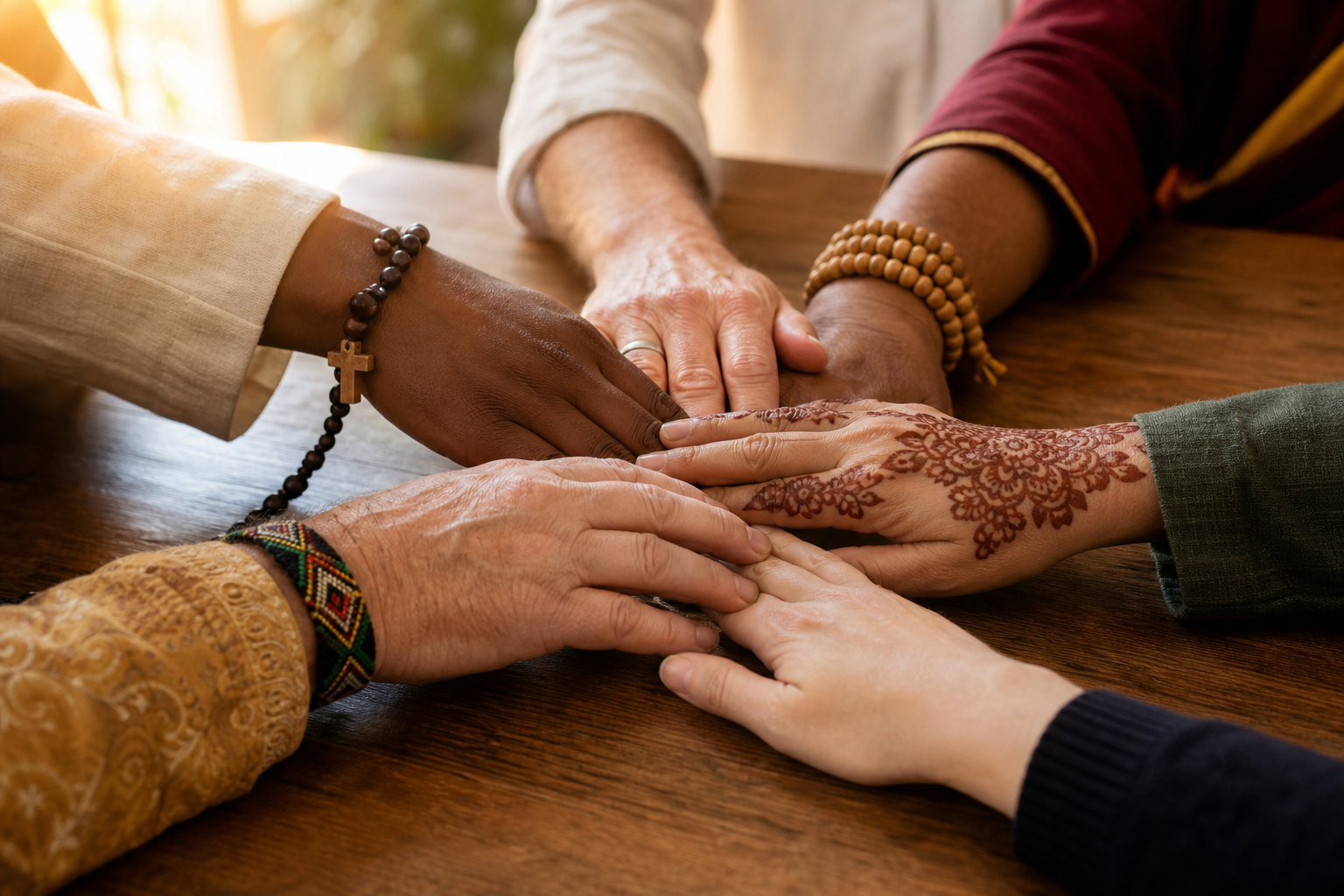
Harmony - The pillars of a sustainable society society
When I close my eyes and picture a society that truly reflects our highest hopes, a place where every person may live securely, freely, and fully, one truth stands out above all others. Equality, justice, freedom, and community are all vital pillars, yet without harmony weaving them together, they can remain separate, even conflicting, forces.
For me there is no doubt at all: harmony is far more than just one desirable feature among many; it is the gentle, unifying spirit that binds all other virtues into something whole, beautiful, and enduring.
Remove it, and however fair or free a society may appear, it risks becoming divided, competitive, and fragmented. To understand what makes a society truly worthy of humanity’s highest hopes, we must explore what harmony truly means, and why it matters so deeply.
To begin with absolute clarity: harmony is not the absence of difference, nor the demand that everyone think, feel, believe, or act in exactly the same way. In the utopia I picture, harmony is never achieved through force, conformity, or the silencing of distinct voices; it is rich, vibrant, and deeply respectful of what makes each person unique. It does not require us to erase our individuality or pretend that all difficulties have vanished.
True harmony means something far deeper: it is the state in which different elements, voices, and ways of being exist alongside one another, not in conflict, but in a balanced, respectful, and mutually supportive relationship.
I often think of it like music: true harmony does not come from every instrument playing exactly the same note, but from many different notes blending together to create something far more beautiful and complete. In the same way, social harmony does not mean uniformity; it means unity without sameness.
It is rooted in mutual respect and a willingness to listen, to understand, and to value others even when their views differ from our own. It recognises that disagreement does not have to mean enmity, and that difference itself can be a source of strength rather than division.
At its heart, harmony is an expression of respect for our shared humanity. It affirms that while we are all unique in our gifts and perspectives, we are also bound together by a common dignity and a shared need for belonging.
In the society I envision, this conviction is lived out in every relationship and every way we organise our life together. Where true harmony prevails, difference is not feared or suppressed; it is welcomed as an opportunity to learn and grow. It creates the space for honest dialogue, where misunderstandings can be gently resolved without resorting to anger or exclusion.
History shows us clearly what happens when this understanding is forgotten: the absence of harmony breeds suspicion, resentment, and deep division. It turns neighbours into opponents and community into a collection of isolated individuals.
By contrast, when harmony is honoured, trust grows deep, suspicion fades away, and we come to understand that the flourishing of one is bound up with the flourishing of all. Diversity is seen not as a threat, but as a great gift that brings richness and wisdom to us all.
Yet harmony is never something that happens by chance, nor something that stays secure without care. It is an active, deliberate choice. It demands patience, empathy, and the willingness to listen more than we speak. It calls upon us to hold our own views with humility, to seek understanding before seeking to be understood, and to choose reconciliation over resentment whenever difficulties arise.
When I look again at my vision of utopia, I see clearly why harmony must run through its very fabric. It is the living truth that says we can be different and still belong; we can disagree and still respect one another. Without it, equality can feel cold, freedom can become reckless, and community can become shallow. Woven through every part of life however, harmony makes every noble vision whole and beautiful.
This is far more than a social or political ideal. It is a moral and spiritual vision, echoing the highest hopes of faith and humanity itself: that one day we may truly live in a world where difference is welcomed, understanding is valued, and all may live together in respect, peace, and unity.
Post a comment