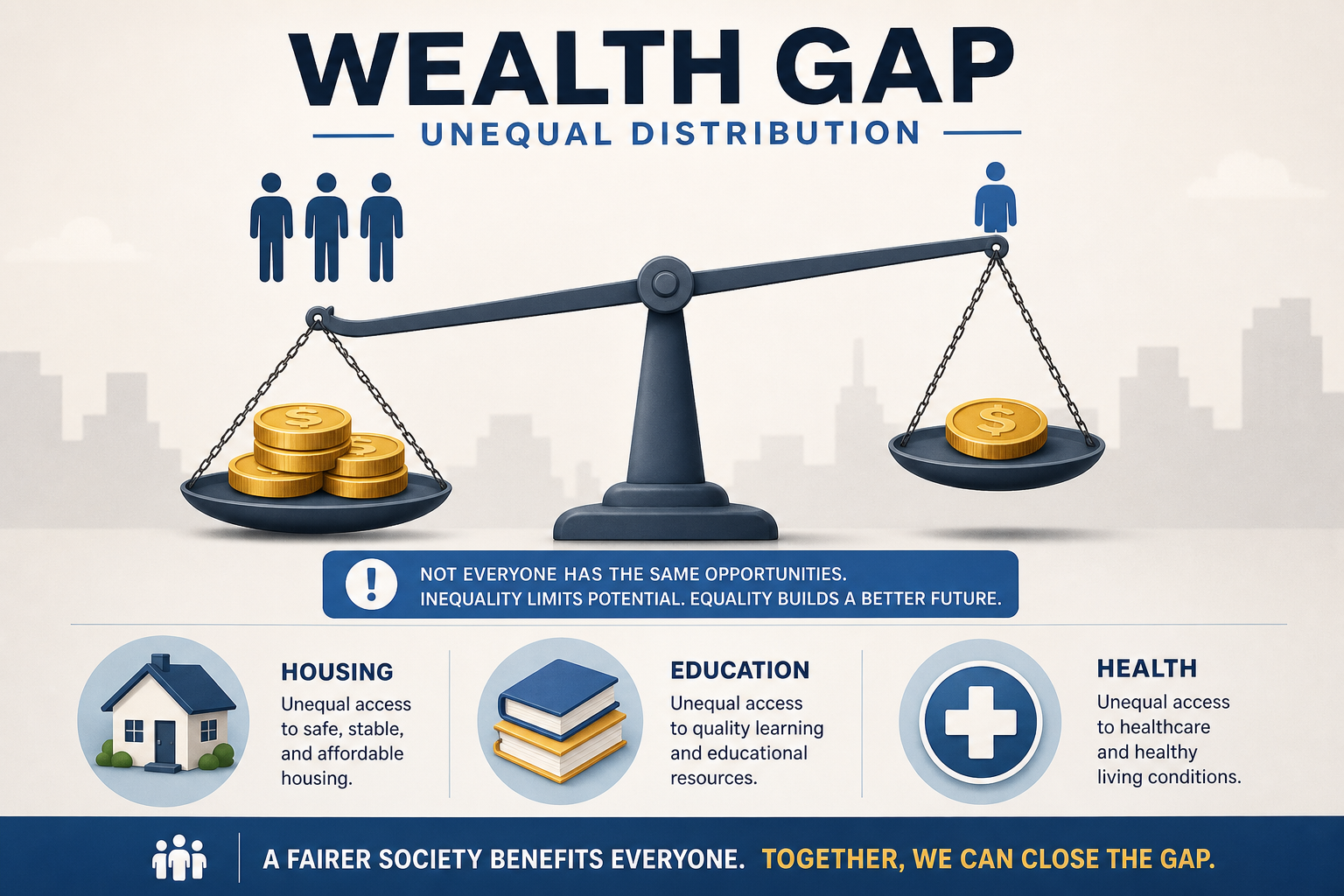
Inequality: The Widening Gap That Undermines Community
We often accept that people have different talents and circumstances, but there is a clear line between natural variety and harmful inequality. When gaps become extreme or permanent, they do not reflect freedom or fair reward; instead, they create distance, division, and a sense that the community no longer works for everyone. It can grow slowly, seeming normal at first, until it changes the very nature of shared life. To understand how societies unravel, we must explore what inequality truly is, how it takes hold, and why it weakens the foundations of a stable and fair way of living.
To begin with clarity: inequality is not the same as natural differences or the right to enjoy the results of one’s own work. This is a common misunderstanding: the belief that any difference in outcome is unjust, or that treating people fairly means treating them exactly the same.
In truth, fairness respects our differences while ensuring everyone has what they need to thrive. Harmful inequality arises when gaps become barriers, when advantage turns into inherited privilege, and when disadvantage becomes a cycle that is almost impossible to escape. It is the unjust gap in power, resources, and opportunity, where a person’s chances depend more on their background than their effort or worth. It is often disguised as merit or tradition, but at its core it denies the equal dignity of every person.
At its heart, inequality creates a society built on separation rather than solidarity. Where it is deep, trust fades, as people feel the system is stacked against them. It wastes talent and potential, stifles progress, and replaces shared purpose with competition. Even those who benefit are harmed, as it isolates them and distorts their understanding of the wider community. It suggests that some must lose for others to gain, which is never true in the long run. Over time, it leaves a society fragile, divided, and unable to face challenges together.
Yet inequality rarely begins as a great injustice; it grows from small assumptions, from blaming those who struggle, and from accepting that some will always be left behind. It takes root when we stop seeing each other as equals and stop asking whether our systems truly serve everyone. Recognising these patterns helps us understand that inequality is not inevitable, but a choice we can choose to change.
There is far more to explore about how inequality gradually widens over time, how it affects every part of community life, and why working towards greater fairness helps build a stronger, more resilient society.
Post a comment