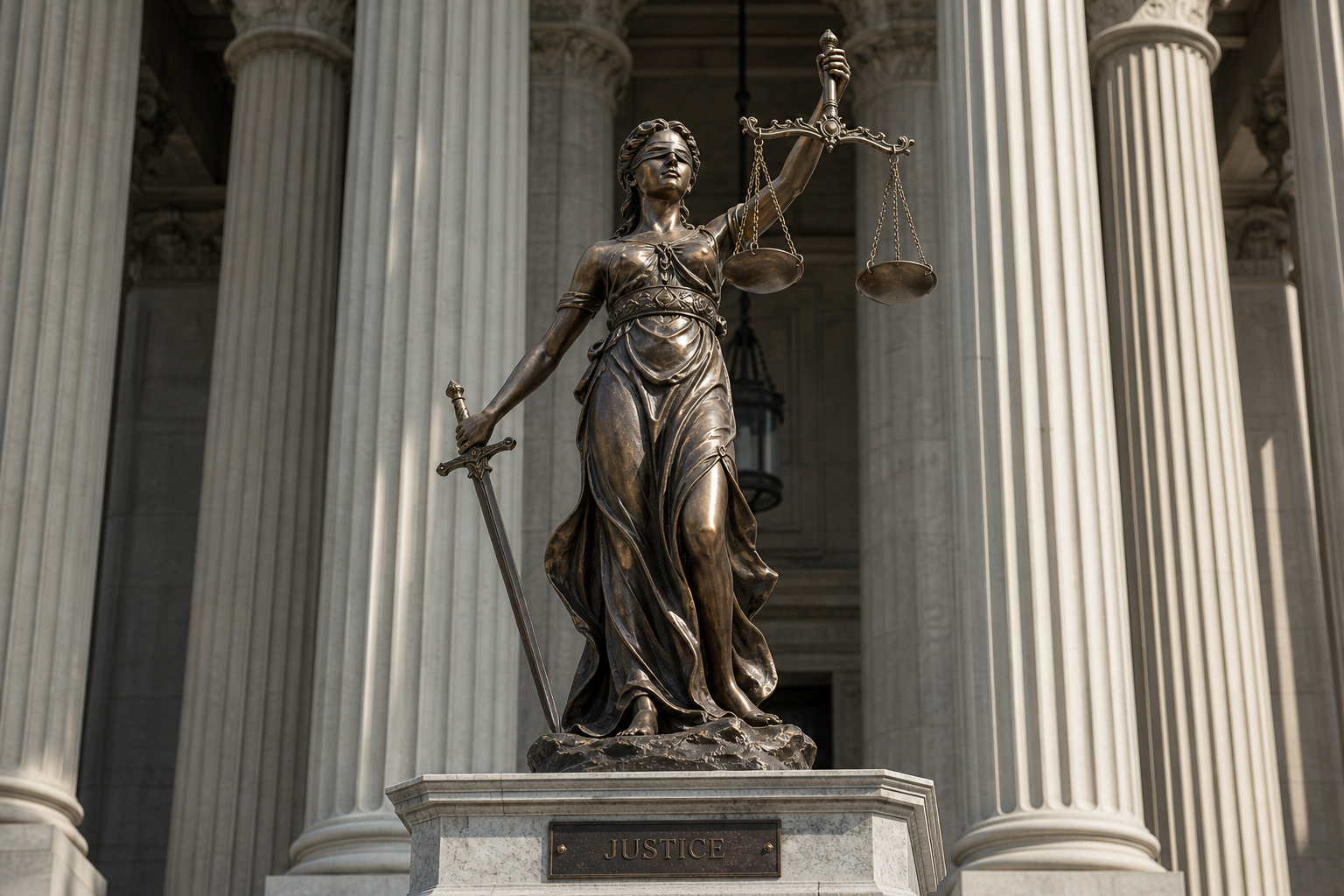
Justice: The Cornerstone Of Trust, Fairness, And Sustainable Society
Over many years of listening to people’s hopes, struggles, and deepest concerns, I have come to recognise that there is one question that lies at the heart of almost every community’s story: do we live in a place where fairness is more than a word, and where every person can rely on consistent respect and protection? It is not wealth or power that ultimately determines whether a society will stand firm through time, but the presence of justice.
This principle is often misunderstood as merely punishment or legal procedure, but in truth it is the living framework that holds relationships together, ensures dignity is honoured, and creates the conditions for life to flourish across generations. Justice is not about creating a perfect world beyond human reach; it is about establishing a way of living together that is balanced, accountable, and capable of adapting while safeguarding the common good. What follows is a reflection on what justice truly means, why it is indispensable to long‑term stability, and how it must be practiced rather than simply declared.
I have observed that justice is one of the most widely spoken of yet poorly understood concepts in public life. Many reduce it to little more than the enforcement of laws or the handing down of penalties when rules are broken. Others see it as a demand for equal outcomes regardless of contribution or circumstance, or as a tool used by one group to gain advantage over another. Still others view it as something abstract and distant, belonging only to courts, governments, or powerful institutions. None of these views capture its full meaning and purpose. Justice, at its core, is the consistent and fair ordering of relationships so that every person receives what is rightly due to them
It begins with the recognition of inherent human dignity; it means respecting the rights of others, fulfilling our obligations toward them, and ensuring that systems and practices do not favour some while excluding or oppressing others. True justice means equality before the law, fair access to resources and opportunities, and the protection of the vulnerable from exploitation or neglect. It is important to distinguish justice from uniformity or favouritism. It does not demand that everyone receive exactly the same treatment in every situation, but rather that treatment is appropriate, consistent, and guided by respect for the worth of each individual
It does not ignore differences in need or circumstance; instead, it seeks to ensure that those with greater needs receive the support required to participate fully in community life, while those with greater capacity bear a fair share of responsibility. Justice is also not about retribution alone; it includes restoration, the effort to repair harm and rebuild trust where relationships have been broken. When we understand justice in this complete sense, we see it as a life‑giving principle, one that brings order without crushing freedom, and balance without stifling human potential.
The role of justice in building a sustainable and flourishing society cannot be overstated. When justice is embedded in the way we live and govern ourselves, it becomes the strongest foundation for trust. People are willing to cooperate, contribute, and plan for the future only when they believe that the rules apply equally to all, that their rights will be protected, and that their efforts will not be undermined by unfair privilege or corruption. Justice reduces division and conflict, because it provides a shared standard by which disagreements can be resolved without resorting to force or fear. It fosters resilience, because it ensures that burdens and benefits are distributed in ways that do not place impossible strain on any one group, and that the well‑being of future generations is not sacrificed for short‑term gain
Consider what happens when justice is absent or weakened. Where laws are applied unequally, where those in power act without accountability, or where access to basic needs and opportunities depends on status or wealth, a deep sense of insecurity takes root. Trust erodes, and people begin to see society as a competition where survival depends on looking out only for oneself and one’s own circle. Resentment grows, social bonds fray, and communities become fragile and unstable. History shows us repeatedly that societies marked by injustice cannot endure for long; they waste human potential, breed unrest, and eventually collapse under the weight of their own imbalance. By contrast, where justice is actively pursued and maintained, the benefits spread across every area of life. Children grow up knowing they have a fair chance to develop their gifts, workers receive just reward for their labour, and those who suffer harm find a path toward resolution and healing
In such an environment, people feel secure enough to invest in their communities, protect the natural world, and make decisions that serve the long‑term common good. Justice is therefore not merely a moral ideal; it is a practical necessity. A society cannot sustain itself if a large portion of its members feel excluded, exploited, or unprotected. True sustainability requires broad‑based commitment, and that commitment can only be sustained when people believe the system in which they live is fundamentally just.
Justice, however, is not something that can be written into law once and then left to run on its own. It is an active, ongoing responsibility that demands attention, reflection, and effort from every level of society. For individuals, living justly begins with how we treat those around us. It means being honest in our dealings, respecting the rights and boundaries of others, and refusing to take advantage of weakness or ignorance. It requires us to examine our own actions and assumptions, to challenge our own biases, and to speak up when we see unfairness or harm being done. Justice in daily life might look as simple as giving a fair hearing to someone whose voice is rarely heard, treating colleagues and neighbours with equal respect, or ensuring that our own decisions do not benefit ourselves at the expense of others
For communities and institutions, justice means building structures that are transparent, accountable, and accessible to all. It means creating laws and policies that are rooted in human dignity, reviewing them regularly to remove barriers or inequalities, and ensuring that those who administer them act with integrity and impartiality. It requires providing access to education, healthcare, and legal protection so that no one is denied justice simply because they lack resources or influence. I have found that justice and responsibility are inseparable; one cannot exist without the other
To uphold justice is to accept that we are all part of one shared community, and that the well‑being of every person is bound up with our own. This is not a burden to be carried by a few, but a duty shared by all. When people understand that justice is in their own long‑term interest, they are more willing to support the systems and habits that keep it alive. This creates a society that can adapt to change, face challenges, and pass on to the next generation not only material resources but also a way of living together that is fair, stable, and hopeful.
As I reflect on what enables a society to endure and flourish, I keep returning to the principle of justice. It is not an unattainable perfection, but a standard toward which we must continually strive. It is the foundation upon which trust is built, peace is maintained, and long‑term well‑being is secured. When we commit ourselves to justice, we affirm that every life matters, that every voice deserves respect, and that the bonds between people are stronger than any temporary advantage or division. Justice is not a luxury or a distant goal; it is essential to the sustainability of our communities
It ensures that our way of life remains balanced, fair, and capable of serving the needs of all people, now and in the years to come. It calls us to look beyond our own immediate interests and to recognise that we are part of something greater, bound together by shared humanity and shared responsibility. In choosing to live out justice, we do not only build a better society for ourselves; we leave a legacy of integrity, security, and hope for generations yet to come.
Post a comment