Respect: The Foundation Of Trust And Dignity In A Sustainable Society
We often think of respect as something we earn, something given only to those we admire, or a polite formality. Yet communities that truly thrive understand it as something far deeper: not a reward for status or good behaviour, but the fundamental attitude that recognises the inherent worth of every person simply because they are human.
A society that withholds respect from some, or treats it as something that must be deserved, will become divided, defensive, and fragile. It erodes trust and makes cooperation difficult. To understand how we build a way of life that lasts, we must explore what respect truly is, and why it is so essential to our shared future.
Respect is not the same as liking someone, agreeing with them, or approving of all they do. Nor is it obedience, fear, or flattery. This is a common misunderstanding: the belief that respect means accepting harm or pretending differences do not exist. In truth, it is far more balanced. It does not require us to ignore wrong, but it does ask us to honour the dignity that belongs to every person, regardless of their choices or background.
True respect is the conscious choice to treat others with courtesy, fairness, and consideration even when we disagree, even when they are different, and even when they have made mistakes. It includes valuing oneself, respecting truth and what we hold in common, and recognising that while actions can be judged, the worth of the person remains.
At its heart, respect reflects our shared humanity: we all hope to be treated fairly, and we all carry burdens and potential that others may not see. Where it is absent, division grows, trust fades, and energy is spent on defence rather than building. By contrast, when it is present, it creates safety and openness. It allows us to disagree without destroying relationship, builds the trust needed for justice and cooperation, and ensures everyone feels valued. It helps us see beyond status or appearance, reduces conflict, and turns differences into opportunities to learn rather than reasons to divide.
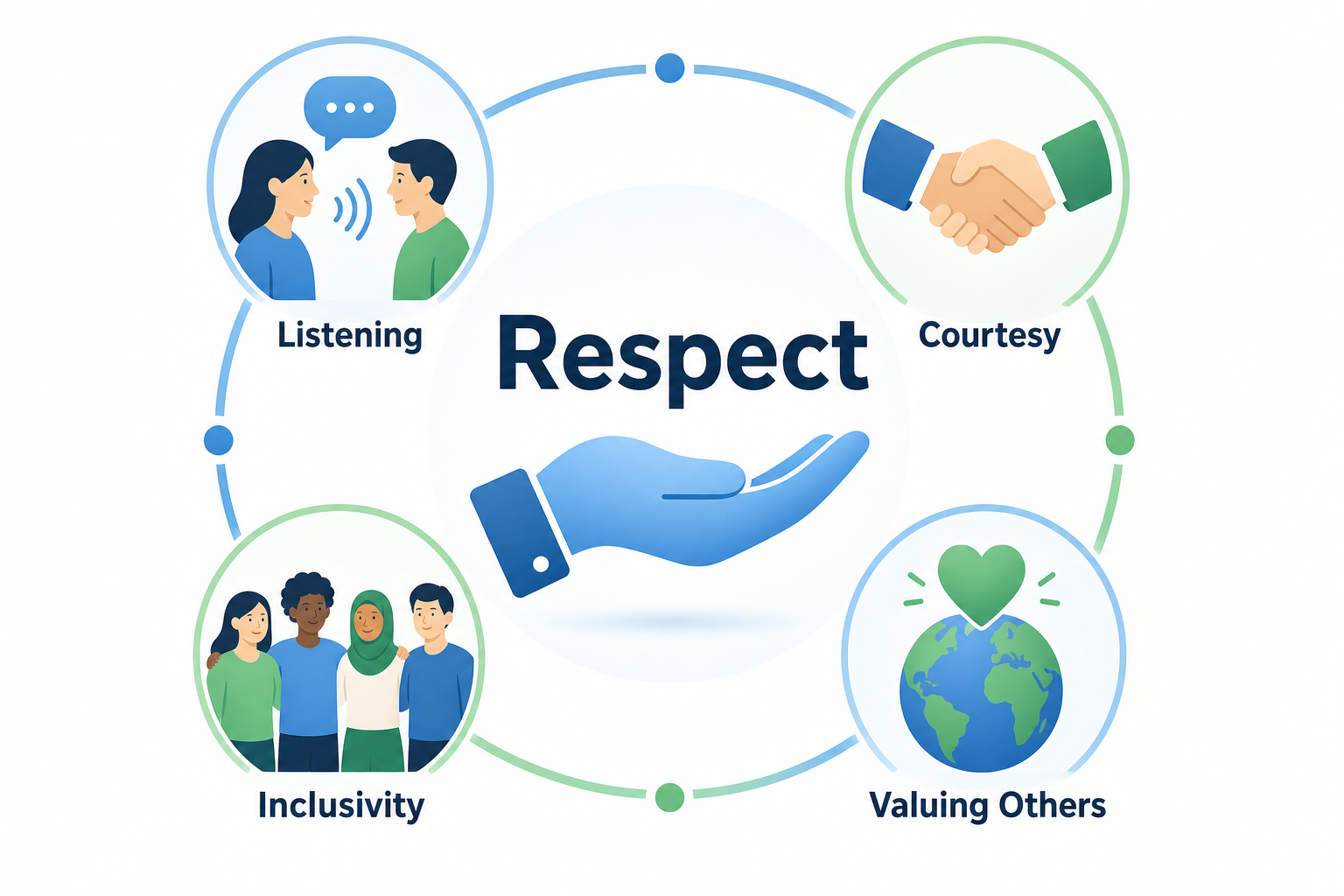
Respect is never automatic; it is a deliberate choice, especially when it is difficult. It calls upon leaders to serve rather than dominate, and to treat even the vulnerable with honour. It does not require us to accept injustice, but to stand firm while still respecting the dignity of others. It is lived out daily through kindness, courtesy, listening, and refusing to belittle or exclude.
There is far more to explore about how respect shapes every part of our shared life, how it balances fairness with understanding, and why it is the solid foundation upon which a just and sustainable society is built.
Post a comment