Well‑Being: The True Measure Of A Sustainable Society
We often measure the success of a society by what it produces, how much wealth it generates, or how advanced its technology becomes. We speak of growth and prosperity as if these are the ultimate goals. Yet it is entirely possible for a nation to be rich and powerful, yet still be marked by loneliness, anxiety, inequality, and a sense that something vital is missing.
This is where well‑being offers a clearer way of seeing: it reminds us that the purpose of all our systems, laws, and work is not merely to create abundance, but to nurture lives that are whole, meaningful, and secure. A society that does not prioritise the well‑being of all its members will eventually find its achievements hollow and its stability fragile. To understand what it means to build something that lasts, we must explore what well‑being truly is, and why it matters so deeply.
To begin with clarity: well‑being is not simply the absence of illness, nor constant pleasure, comfort, or endless personal happiness. This is a common misunderstanding: the belief that it means a life free from difficulty, or that it is found only in possessions or status. In truth, it is far deeper and more resilient.
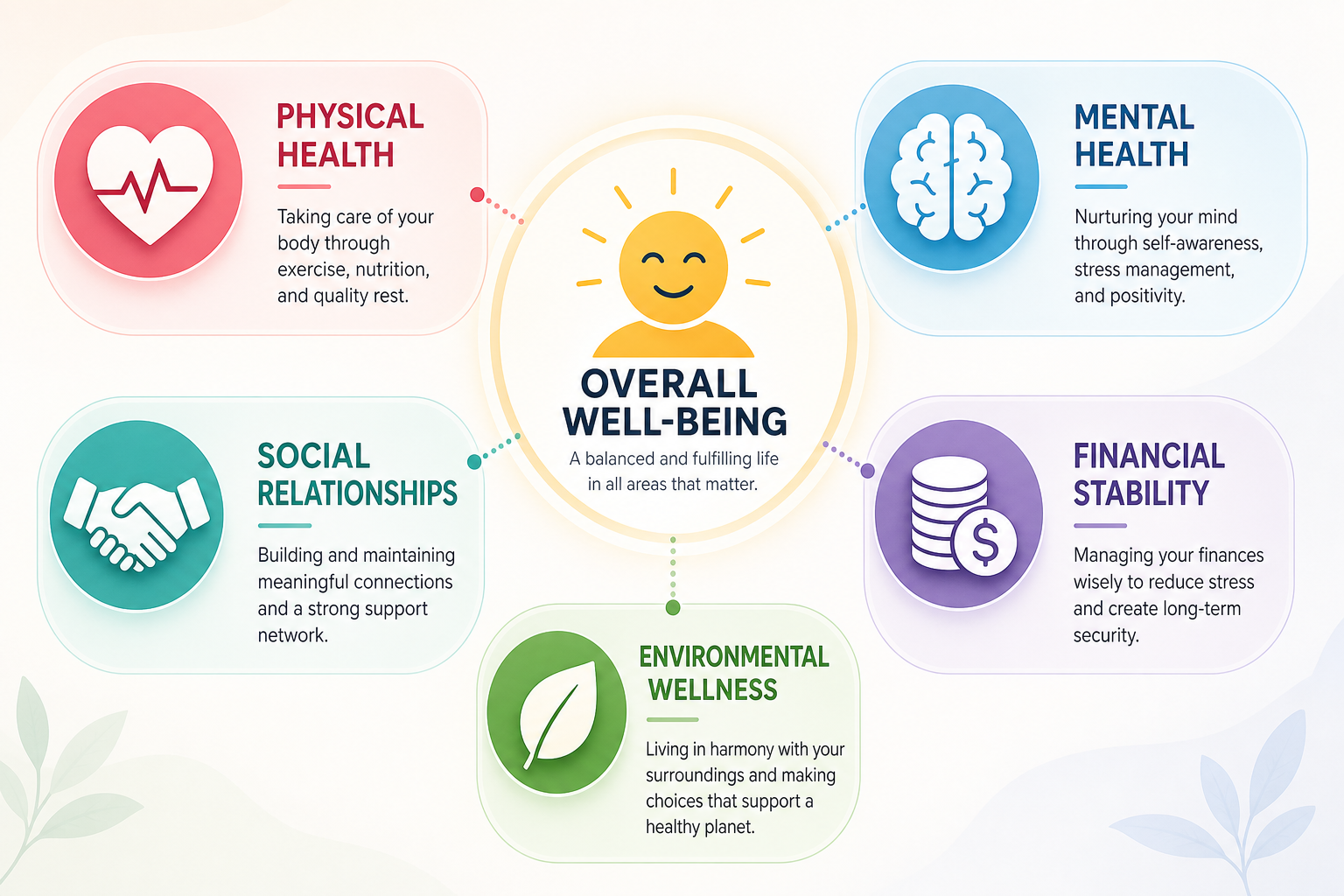
It is not a state of permanent ease, but a condition of wholeness that allows people to grow and find meaning even in hard times. True well‑being is the holistic state of being physically healthy, mentally at peace, emotionally supported, and socially connected — living with dignity, purpose, and belonging. It means having what we need to live safely, but also being valued, respected, and free to develop our gifts. It recognises that our own flourishing is linked to that of others; we cannot truly thrive while those around us are excluded or suffering.
At its heart, well‑being reflects the truth that every person has inherent worth, and that the greatest achievement of any society is to help each person live fully. Where it is ignored, trust fades, cooperation weakens, and communities become fragile. By contrast, when it is made a priority, it transforms how we live. It creates resilience, builds fairness, and helps us understand that fulfilment comes more from relationships and purpose than from endless consumption. It shifts our focus from “how much can we gain?” to “how well can we live together?” a question essential for a sustainable future.
Yet well‑being is never something that happens by chance; it is both a personal choice and a shared commitment. It calls upon leaders and communities to create conditions where everyone can thrive, balancing challenge with support and dignity with fairness. It is nurtured in small, daily acts of care, respect, and connection.
There is far more to explore about how well‑being shapes every part of our shared life, how it strengthens our communities, and why it is the surest foundation for a future that is both prosperous and humane.
Post a comment